Skiftet till mobilt

When users greatly favor a new user experience over an old one (in this case the mobile application environment versus a browser based desktop environment), the implication is clear – we are in the middle of a critical platform transition. Platform transitions are rare, yet highly consequential. The first consumer-based transition was DOS to Windows in the late 1980s. Many fortunes were won and lost based on how well companies like Borland and Lotus executed this transition. Then came client-server, which also launched new winners at the expense of older incumbents. The next obvious transition was the rise of the browser in 1996, which transformed not only the software application market but also the print and media world. The browser-based Internet launched many new companies, several of which have achieved market capitalizations in the billions. Most interestingly, new company wealth (pure play Internet companies) far exceeds “transitioned wealth” (incumbent companies transitioning their model successfully to the new platform). TripAdvisor and Yelp rule the day, not Frommers and Zagat. Likewise Priceline and Expedia rule travel, not some travel company that existed pre-Internet. Google, Yahoo, Ebay, Facebook, and Twitter rule the Internet, not Microsoft.

Bill Gurley har skrivit en fantastisk post om smartphones och mobilrevolutionen , ”Transitioning To a Mobile Centric World”. Måsteläsning.

Vilka är vinnarna i framtidens ehandelslandskap?

Skärmbild_2013-07-19_18_44

Vilka är vinnarna i framtidens ehandelslandskap? Och vilka aktörer, trender och utmaningar förändrar ehandeln just i detta nu? För ett tag sedan blev jag intervjuad av Veckans Affärer för ett större reportage om ehandel. Jag berättar om Osom, Headler och om några av de största möjligheterna inom ehandeln just nu – mobilt och socialt. Inte minst slår jag ett slag för att det saknas innovation. Likväl som Google var ett window of opportunity är mobilt och socialt det just nu – men väldigt få tar tillvara på det.

Nu finns större delen av reportaget även på webben och kan läsas här.

A Fab Journey & en studie i ehandelstillväxt

Skärmbild_2013-06-26_00_18

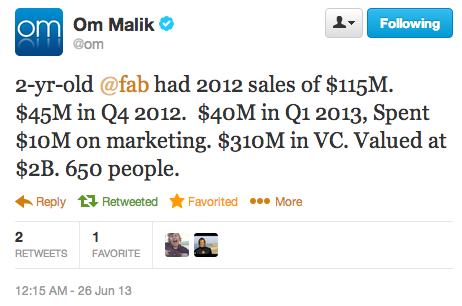
Fab har presenterat en del siffror nyligen. Helt otrolig tillväxt, snabb internationalisering (de har redan över 1 miljon användare i UK) och fortsatt utvecklande av konceptet. Nu också med påfylld kassa. De vill, som VDn och grundaren Jason Goldberg förklarar, bli det femte ehandelsbolaget i världen att värderas till över 10 miljarder dollar.

As Goldberg explains, there are currently only four e-commerce companies in the world that are valued at more than $10 billion: Amazon, Alibaba, eBay, and Rakuten. He believes that Fab has a legitimate chance to be the fifth by leading in what he calls Emotional Commerce. This basically means that Fab helps people discover the items they love and want.

Det är ingen dåliga ehandelsresa de gör, Fab. Så sent som januari 2011 var de ett socialt nätverk för homosexualla. Sedan gjorde de ett par snabba pivots för att imponerande enkelt hitta rätt med det designfokus de har nu. Och nu alltså fortsatt fantastisk tillväxt med förväntad försäljning för mer än $250M under 2013. Deras presentation om deras första år med Fab är oerhört sevärd, fortfarande. 1 miljon användare på fem månader är inte så lite imponerande.

Finns det ett ehandelsbolag man ska lära sig av just nu så är det Fab.

Historien om hur vi startade Osom

Min co-founder Björn har skrivit om hur vi startade Osom. En fantastisk berättelse att läsa, även för mig. Från hur vi bestämde oss för att jobba ihop, till hur vi kom på idén, till hur vi byggde the founding team till hur vi lanserade. Och framförallt, hur vi numera inte längre startar upp någonting – utan hur vi numera jobbar med.

Läs Björns post här: From starting to working at – the story of Osom

Kan inte mer än att citera Björn – It’s going to be a hell of a ride.

Konsten att lansera

Ingen har väl undgått dagen som köp-och-säljappen Osom fullkomlig dominerade i flödena på sociala medier, med 5 000 delningar och likes på Facebook och ytterligare 5 000 mentions och retweets på Twitter på en och samma dag. Det är vad jag kallar en hajpad lansering, men hur gör man? Anton Johansson är en av männen bakom Osom och här delar han med sig av sina tips för att lyckas med hajpen:

Frilansskribenten Caroline Björkgren har intervjuat mig om hur vi byggde upp lanseringen av Osom. Läs ”Så skapar du hype inför lanseringen” om du är intresserad av att förstå vilket jobb det ligger bakom en lyckad lansering. Det är ingen rocket science. En kick-ass produkt, sticky story, goda connections och ett track-record är vad som krävs för att lyckas. PR och sociala medier handlar, som så mycket annat, i första hand om trovärdiga relationer.

Emotional Commerce

Emotional Commerce

”The third wave of e-commerce is all about bringing emotional purchases online. Non-commodity products. More thoughtful purchase decisions. I like to call this Emotional Commerce. This is categories like furniture, home accessories, home textiles, fashion, art, and jewelry. These are categories where people care about having something special in their lives.” – Jason Goldberg, grundare och VD på Fab.

Jason har skrivit en mycket bra bloggpost om emotional commerce, något vi på Osom är ett tydligt exempel på (tillsammans med bla Fab, Pinterest, Etsy och Fancy). Jag har bloggat om emotionell handel tidigare och det är kul att mycket av mitt resonemang känns igen i Jasons bloggpost. För varje dag som går blir jag ännu mer övertygad om att emotional commerce är den mest omvälvande ehandelstrenden just nu, men med fortfarande väldigt få aktörer. Det är i mobile commerce, social commerce och emotional commerce de stora nya möjligheterna finns för ehandeln.

Mobile thoughts

Alltid lika briljante Chris Dixon har skrivit ned några läsvärda analyser om mobila utvecklingen, ”Some thoughts on mobile”. Hela bör läsas, men detta utsnitt är en bra sneak peak.

– App stores have had a few important effects: 1) They take 30% of revenue, which scares away most big companies (e.g. Microsoft) and also startups/venture capitalists. Not many businesses can survive an immediate 30% haircut. 2) They’ve led consumers to expect very low prices for software. It’s hard to imagine charging $30 let alone hundreds of dollars for software through app stores (although some mega-hit games do get near these levels with in-app purchases). This is why many big software vendors are scared. 3) The discovery mechanisms (e.g. top download charts) tend to have a rich-get-richer effect, making it very hard for software to grow from niches, as they often did in the past. Just as in the movie industry, the trend is toward creating blockbusters that appeal to everyone. The emergence of new app discovery mechanisms (e.g. FB & Twitter) might alleviate this problem.

”The Bastard Son of Craigslist & Instagram”

Osom

”Imagine for a moment that Craigslist, the granddaddy of online classified ads, happened to have an affair with Instagram, the artsy girl from down the street. Now imagine those two had a lovechild that somehow came out Swedish. If you can envision that, then you’ve got a pretty solid idea of what Osom is like. Seriously, that comparison couldn’t be more spot on.”

This funny yet very kick-ass app review by The Manual makes me proud.